

CCTV Cameras Frequently Asked Questions in Kenya
Choosing a CCTV system for your home, office, shop, apartment, school or commercial property can raise many questions. What type of camera should you choose? How is CCTV footage stored? Can you view cameras from your phone? Will CCTV cameras work at night?
Below, we answer some of the most common questions about CCTV cameras, installation and surveillance systems in Kenya.

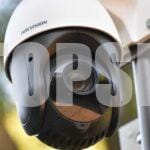

What does CCTV stand for?
CCTV stands for Closed-Circuit Television. A CCTV system uses cameras to capture video footage within a specific area and transmit it to a recording or monitoring system.
Unlike ordinary television broadcasting, CCTV footage is intended for a limited, authorized group of users.
Modern CCTV systems can provide much more than basic video recording. Depending on the equipment installed, you can have features such as:
- High-definition video
- Night vision
- Motion detection
- Remote viewing
- Video recording
- Smartphone notifications
- Digital zoom
- Audio recording on supported cameras
- Remote playback
The two broad categories commonly used today are analogue CCTV systems and IP camera systems.
What is the difference between analogue and IP CCTV cameras?
Analogue CCTV cameras transmit video to a digital video recorder (DVR), while IP cameras send digital video over a network to a network video recorder (NVR) or another compatible storage system.
Analogue CCTV systems can be a practical option for upgrading or installing traditional surveillance systems, particularly where existing cabling is available.
IP CCTV cameras offer network-based connectivity and can provide higher resolutions and advanced features. They can also make remote monitoring easier when the system is properly configured and connected to the internet.
The right option depends on your property, required coverage, existing infrastructure and budget.


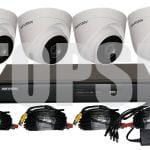
Do I need CCTV cameras for my home or business?
CCTV cameras can provide an additional layer of security by allowing you to monitor important areas of your property and review recorded events.
For a home, cameras can help monitor entrances, gates, driveways, compounds and other vulnerable areas.
For a business, CCTV can help monitor entrances, customer areas, stock rooms, offices, warehouses and other critical locations.
A CCTV system should be viewed as part of a broader security strategy rather than a replacement for every other security measure.
Can I view my CCTV cameras from my phone?
Yes. Many modern CCTV and IP camera systems can be configured for remote viewing on smartphones, tablets and computers.
Once the system has been correctly installed and configured, an authorized user may be able to:
- View live camera feeds
- Review recorded footage
- Receive motion or security alerts
- Check cameras remotely
- Manage certain camera settings
Remote access depends on the camera system, recorder, network connection and software being used.
Can more than one person view the CCTV cameras?
Yes. Many modern surveillance systems support multiple authorized users.
For example, a business owner may want access while also giving a manager or security supervisor limited access.
However, user permissions should be managed carefully. Only trusted individuals should receive access, and strong passwords should be used to protect the surveillance system.
Do CCTV cameras work at night?

Yes. Many CCTV cameras are designed for nighttime surveillance.
Depending on the model, a camera may use infrared (IR) illumination, low-light technology or other image-enhancement features to capture footage in dark conditions.
However, not every night-vision camera performs equally well. Factors such as lighting, camera quality, distance and the environment can affect the final image.
When choosing CCTV cameras for a property, nighttime coverage should therefore be considered during the system design stage.
Can CCTV cameras record in complete darkness?
Some cameras can produce usable images in very low-light or dark environments using infrared illumination.
However, the quality and range of nighttime footage depend on the camera’s specifications and the environment being monitored.
For example, a camera covering a small entrance may require very different night-vision capabilities from a camera monitoring a large compound or perimeter.
Where is CCTV footage stored?
CCTV footage can be stored using different technologies depending on the system.
Common options include:
- DVR storage for analogue CCTV systems
- NVR storage for IP camera systems
- Network storage
- Cloud-based storage
- Hybrid storage solutions
The amount of footage you can retain depends on factors such as the number of cameras, recording resolution, frame rate, storage capacity and recording settings.
What happens when the CCTV hard drive becomes full?
Many CCTV recording systems use overwrite recording.
When the available storage space becomes full, the system can automatically replace the oldest recordings with newer footage.
The exact behaviour depends on how the recorder has been configured.
If you need to retain footage for a longer period, additional storage capacity may be required.
How long can CCTV cameras record?
There is no single recording period that applies to every CCTV system.
Recording duration depends on:
- Number of cameras
- Camera resolution
- Storage capacity
- Recording schedule
- Frame rate
- Compression technology
- Motion-based versus continuous recording
A professional CCTV installer can calculate the required storage capacity based on how long you want to retain your footage.
Can CCTV cameras record audio?
Some CCTV cameras have built-in microphones or support external audio devices.
However, audio recording raises additional privacy and legal considerations, so audio functionality should be used appropriately and in accordance with applicable requirements.
Can CCTV footage be viewed remotely when I am away from home or the office?
Yes, if the CCTV system supports remote access and has been properly configured.
With an internet-connected system, authorized users may be able to check live footage or recorded video while away from the property.
This is particularly useful for business owners and property managers who need to monitor their premises remotely.
Can CCTV cameras detect movement?
Many modern CCTV cameras support motion detection.
Depending on the system, motion detection can trigger recording, notifications or other programmed actions.
More advanced systems may also provide features such as human or vehicle detection, helping reduce unnecessary alerts compared with basic motion detection.
How many CCTV cameras do I need?
The number of cameras depends on the size and layout of your property and the areas you want to monitor.
A small home may require only a few strategically positioned cameras, while a warehouse, school, apartment complex or commercial property may require considerably more.
A professional site assessment can identify entrances, blind spots, parking areas, perimeter zones and other locations that require surveillance.
Where should CCTV cameras be installed?
Common CCTV camera locations include:
- Main entrances
- Gates
- Driveways
- Parking areas
- Reception areas
- Perimeters
- Corridors
- Warehouses
- Shops
- Cashier areas
- Storage areas
Camera positioning should provide useful coverage while avoiding unnecessary views into private areas.
Can CCTV cameras zoom in?
Some cameras support digital zoom, while others provide optical zoom.
PTZ (Pan-Tilt-Zoom) cameras can physically move and zoom, making them useful for applications requiring active monitoring of larger areas.
For fixed cameras, choosing the correct lens and resolution is often more important than relying on digital zoom after footage has been recorded.
What should I do if my CCTV footage is blurry?
Blurry CCTV footage can have several causes, including:
- Dirty camera lenses
- Incorrect focus
- Poor lighting
- Low camera resolution
- Incorrect camera positioning
- Network or recording issues
- Damaged equipment
Cleaning the lens is a simple first step, but persistent image-quality problems may require professional inspection.
How much does CCTV installation cost in Kenya?
There is no single fixed price for CCTV installation in Kenya.
The total cost can depend on:
- Number of cameras
- Camera type
- Camera resolution
- DVR or NVR
- Hard-drive capacity
- Cabling
- Installation complexity
- Network requirements
- Accessories
- Remote monitoring requirements
For this reason, a proper quotation should be based on the property and the required surveillance coverage rather than simply the number of cameras.
Where can I get CCTV cameras and professional installation in Kenya?
TopSec Technologies provides CCTV cameras, surveillance equipment and CCTV installation services in Kenya.
Our team can assess your property, recommend suitable equipment and configure your system for monitoring and recording according to your requirements.
Need help choosing a CCTV system? Contact TopSec Technologies for a CCTV installation assessment and quotation.
Call: 0796 604 245
Call: 0727 998 426
Final SEO additions I’d make
At the bottom of this FAQ, add internal links to your other pages using natural anchor text:
- CCTV camera installation in Kenya
- CCTV cameras in Kenya
- CCTV camera company in Kenya
- Importance of CCTV cameras in Kenya
This gives Google a clear relationship between your pages without stuffing the same keyword repeatedly.
Also, I would not put the big sections from your old article titled “Understanding Security System Benefits and Implementation” and “Comprehensive CCTV System Design and Optimization” into this FAQ. Those are useful subjects, but they should become separate, focused content pieces. That will prevent this FAQ from becoming a huge page competing with your installation and CCTV-company pages.
Next, we should revamp “The Importance of CCTV Cameras in Kenya.” That page can target “importance of CCTV cameras in Kenya” and focus entirely on benefits, security, crime deterrence, business protection, monitoring, evidence, employee/visitor safety and property protection—without repeating the FAQ content.
